
Talk to us
Whether you're a Brand looking to make your mark, a Sports Entity aiming to maximise your revenue, or a Talent seeking to build a lasting legacy, we're here to help you achieve your goals.
.svg)

A look at how LEGO turned its FIFA World Cup 2026 partnership into a global fan-first campaign built on nostalgia, creativity and participation.


Every four years, the FIFA World Cup becomes far more than a sporting event. It becomes a global cultural phenomenon. For players, it is legacy. For fans, it is emotion. For brands, it is the most iconic stage of visibility, prestige, emotional relevance and cultural influence.
Every CMO, marketing director, and brand strategist wants to be associated with the World Cup. Not simply because people are watching football, but because, for one month, the world is watching the same thing together. In an era of fragmented attention spans and algorithmic chaos, that kind of collective focus is marketing gold. And ahead of the 2026 FIFA World Cup™, one brand appears to have already lifted the trophy.
The LEGO Group.
Back in December 2025, FIFA announced a commercial partnership with LEGO ahead of the tournament. On paper, the collaboration sounded simple enough: combining football with creativity through products, content, and fan experiences designed to connect with audiences beyond the pitch. It became much bigger.
The campaign exploded globally, generating millions of interactions, fan recreations, social conversations, and cultural moments long before a ball had even been kicked. Which raises an important question: how did LEGO manage to dominate the World Cup conversation before the tournament even started?
The answer lies in one brilliantly simple strategic insight: Football belongs to everyone.
That single truth became the foundation of the campaign’s central idea: Everyone Wants a Piece.
And suddenly, everything clicked.
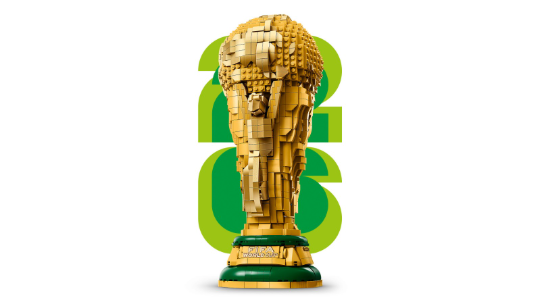
As attention shifted toward the 2026 tournament following the official draw in Washington D.C., LEGO entered the conversation at exactly the right moment. Not loudly. Not aggressively. Just cleverly. Fans were invited to help build a life-sized replica of football’s most iconic prize - the World Cup trophy itself - allowing supporters to quite literally take part in constructing the magic of the tournament.
The message was subtle but incredibly effective:
Not a campaign. A feeling.
Then came the nostalgia play and this is where the strategy became genuinely elite. One month later, World Cup Winners Roberto Carlos, Iker Casillas, Marco Materazzi, Sami Khedira and Cafu appeared together in a campaign image recreating one of football’s most emotional rituals: the kiss with the World Cup trophy. It was smart. Funny. Instantly shareable. But most importantly, it understood football fans perfectly. Because fans do not remember marketing campaigns.
They remember moments.
They remember where they were when their country won. They remember the players they idolised. They remember celebrations, heartbreak, chaos, drama, and joy. LEGO did not try to interrupt those memories. It inserted itself inside them.
Again, the same message appeared:
Something is building.
And then LEGO truly pressed the accelerator.
On April 2nd, the brand released its flagship campaign film featuring four of football’s biggest modern icons: Lionel Messi, Cristiano Ronaldo, Kylian Mbappé, and Vinícius Júnior.
But the cleverest decision was this: the fan became the main character. That is the moment Everyone Wants a Piece stopped being an advertising campaign and became internet culture. The commercial’s AI-powered visual style opened the door for millions of fans to participate. Recreating the concept for different sports, trends, memes and even personal stories. Suddenly, the campaign no longer belonged to LEGO alone. The audience took ownership of it. That is modern marketing at its best. Not controlling the conversation.
Designing something people want to play with.
Alongside its digital strategy, LEGO expanded the campaign into limited-edition collectible minifigures, interactive fan zones, and immersive football-building experiences across selected markets. Every touchpoint reinforced the same strategic idea: football is creative, emotional, participatory and universal. Which are also the same qualities that built LEGO into one of the world’s most loved brands. Football and great marketing rarely get bigger than this.
In 2026, the World Cup will not only be watched. It will be built. And when the final whistle blows, millions of people will remember who won the tournament, but will also remember what LEGO built around it.
If you work in marketing and want to explore how sport can accelerate brand growth while creating something people genuinely enjoy, reach out to Pansports and start building the next big idea.
Whether you're a Brand looking to make your mark, a Sports Entity aiming to maximise your revenue, or a Talent seeking to build a lasting legacy, we're here to help you achieve your goals.



Coppergate House, 10 Whites Row, London E1 7NF

